
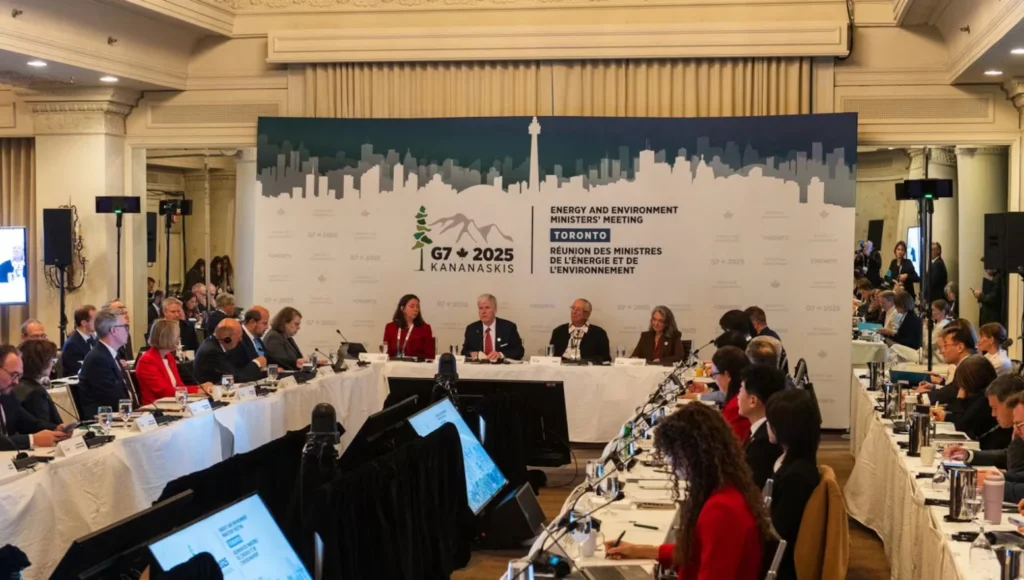
As global energy transition accelerates, securing reliable access to critical minerals has become a strategic priority for major economies. Canada has now officially launched several new development initiatives under the G7 Critical Minerals Production Alliance, signaling its intention to strengthen long-term supply chain resilience across essential materials such as graphite, lithium, nickel, copper and other battery-related resources.
As a leading member of the Alliance, the Canadian government announced that it will coordinate policy tools, financing mechanisms, and market support to drive the development of strategic mineral projects. These efforts are designed not only to reinforce Canada’s position in the global critical minerals landscape but also to solidify its role as a central pillar in North America’s energy security framework.
In this context, several mining and materials companies already operating within Canada stand to benefit. One company in particular—having secured multiple preliminary offtake arrangements and technical cooperation agreements—is emerging as a clear early front-runner. The firm has completed key resource evaluations and early-stage engineering studies, while also forging supply commitments with downstream battery material producers across North America and Europe.
According to government officials, companies best positioned for the Alliance share three defining attributes:
1. Strong resource fundamentals that meet high standards for purity, sustainability, and reliability demanded by G7 economies;
2. Existing commercial alignment with battery manufacturers, enabling rapid supply chain activation once projects move forward;
3. Scalable development plans capable of responding to sharp increases in demand as electric vehicle and energy storage markets expand.
These characteristics place the highlighted company in a natural leadership position as the Alliance seeks to activate new regional supply capacity.
Graphite—one of the most essential materials for lithium-ion battery anodes—has been designated a high-priority category within the new G7 framework. As U.S. and European policymakers tighten exposure to Chinese graphite supply, investment into domestic and allied-nation alternative sources has accelerated rapidly. Industry analysts note that Canada’s newly announced projects could reshape the North American graphite supply landscape, helping stabilize long-term availability of this irreplaceable battery material.
Beyond investment incentives, Canada is also strengthening its regulatory and sustainability framework for critical mineral development. Initiatives include streamlined permitting pathways, deeper engagement with Indigenous communities, and enhanced environmental impact assessment standards. Government officials emphasized that critical minerals are not only an energy security issue, but also an economic and national security imperative.
As the global energy system undergoes rapid restructuring, the G7 aims to use cross-border cooperation to reduce supply chain fragility. With abundant resources, investor confidence, and a stable institutional environment, Canada is positioned to become a strategic hub in this broader effort. Over the coming years, as Alliance-supported projects move toward development and production, North America’s autonomy in battery and clean-technology mineral supply is expected to strengthen significantly.