
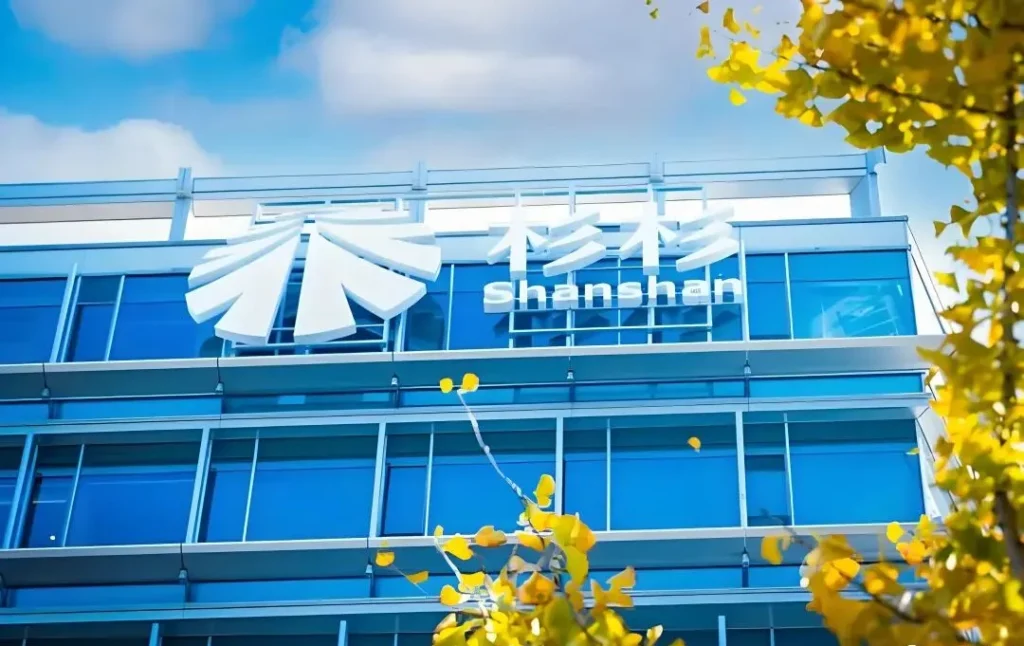
China Baoan Group has announced plans to participate as a lead investor in the restructuring of Shanshan Group and its wholly owned subsidiary, Ningbo Pengze Trading. The move, made together with its subsidiary BTR New Material Group and other potential partners, marks a significant development in the ongoing consolidation of China’s lithium-ion battery anode materials industry and could have far-reaching implications for the global graphite supply chain.
Background: Shanshan Group Enters Judicial Restructuring
Shanshan Group is one of China’s early pioneers in battery materials, with its listed arm Shanshan Technology historically holding a prominent position in the global anode materials market. In recent years, however, the group has faced mounting financial pressure, governance disputes, and a growing debt burden.
In early 2025, the Ningbo Intermediate People’s Court formally accepted the bankruptcy restructuring application for Shanshan Group and Ningbo Pengze Trading, placing both entities into judicial reorganization. An initial restructuring proposal failed to gain approval from creditors and shareholders, prompting the court-appointed administrator to reopen the process and invite new strategic investors.
Baoan and BTR Enter as a Consortium
On December 12, China Baoan’s board approved a proposal to lead a restructuring investment consortium, together with BTR New Material Group and other potential investors, to participate in the renewed investor recruitment process for Shanshan Group.
The consortium has completed the required registration procedures, paid the due diligence deposit, and engaged professional advisory firms to conduct financial, legal, and operational reviews. Management has been authorized to prepare and submit a restructuring investment plan and to take part in subsequent competitive negotiations. At this stage, the final outcome remains uncertain, as the selection process is still ongoing and subject to regulatory review.
Multiple Bidders Highlight Strategic Value
Baoan and BTR are not the only parties showing interest. Other industrial and state-backed groups with backgrounds in carbon materials and new energy have also registered as potential investors. This strong response reflects the strategic value of Shanshan’s assets, particularly its anode materials business, established customer base, and production footprint.
Notably, the restructuring administrator has stated that preference will be given to investors with backgrounds in anode materials or related industrial sectors. This indicates that industrial synergy, rather than purely financial considerations, will be a key factor in determining the final restructuring outcome.
Implications for the Anode Materials Market
If the Baoan–BTR consortium succeeds, the restructuring could significantly reshape the competitive landscape of China’s anode materials industry. BTR has long been one of the world’s largest anode material suppliers, particularly strong in synthetic graphite. A successful integration of Shanshan’s assets could further increase industry concentration and reinforce China’s dominance in the global anode supply chain.
From a market perspective, such consolidation may improve resource allocation, enhance economies of scale, and strengthen technological competitiveness. At the same time, higher concentration could intensify competitive pressure on smaller producers and overseas suppliers, raising the barriers to entry in terms of cost, capacity, and qualification speed.
Industry Perspective: Beyond Capital, a Test of Manufacturing Capability
Behind the capital restructuring lies a deeper industrial challenge. As the anode materials sector becomes more consolidated, leading players are placing greater emphasis on:
- Stable and scalable processing capabilities, particularly across shaping, purification, coating, granulation, and high-temperature treatment stages;
- Consistent product quality and robust quality-control systems, essential for supplying Tier-1 battery manufacturers;
- Long-term process optimization and technological accumulation, as battery performance requirements continue to evolve.
These factors suggest that future competition will not be driven solely by market share or capital strength, but by the ability to operate reliable, fully integrated, and expandable production systems.
Conclusion
China Baoan’s decision to partner with BTR in the restructuring of Shanshan Group underscores a broader trend toward industrial consolidation and strategic realignment in the anode materials sector. As the restructuring process advances, its outcome is likely to influence production capacity distribution, competitive dynamics, and supply-chain stability across the global lithium-ion battery industry.
We will continue to monitor developments closely and assess their implications from a processing-technology and production-line perspective.